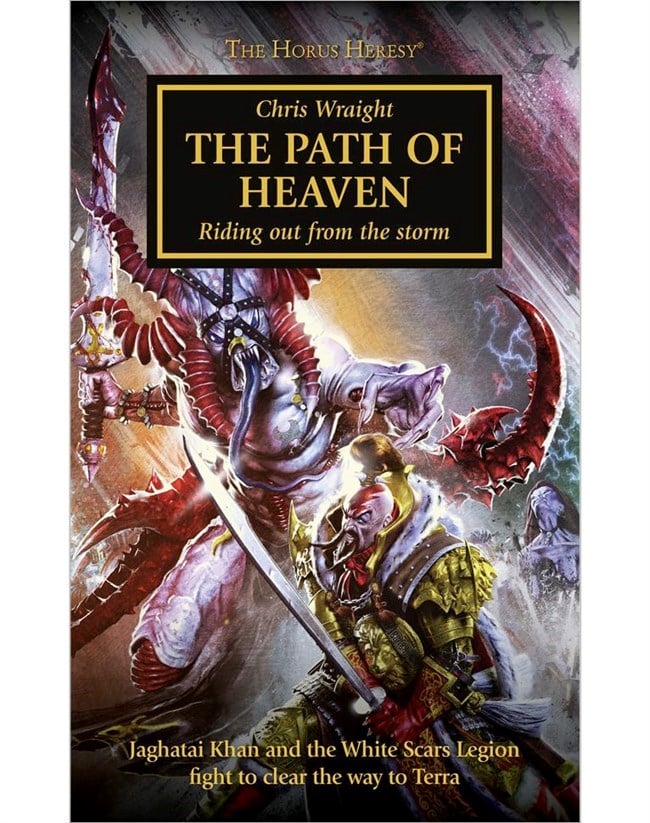
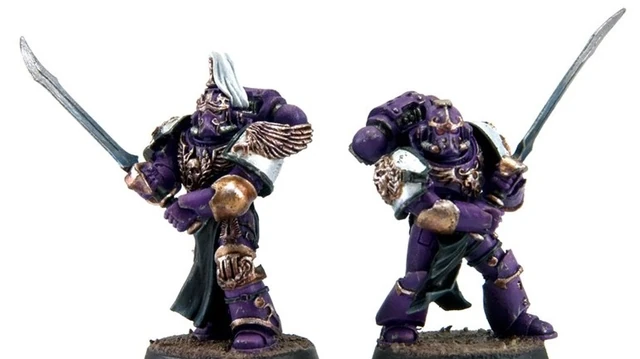
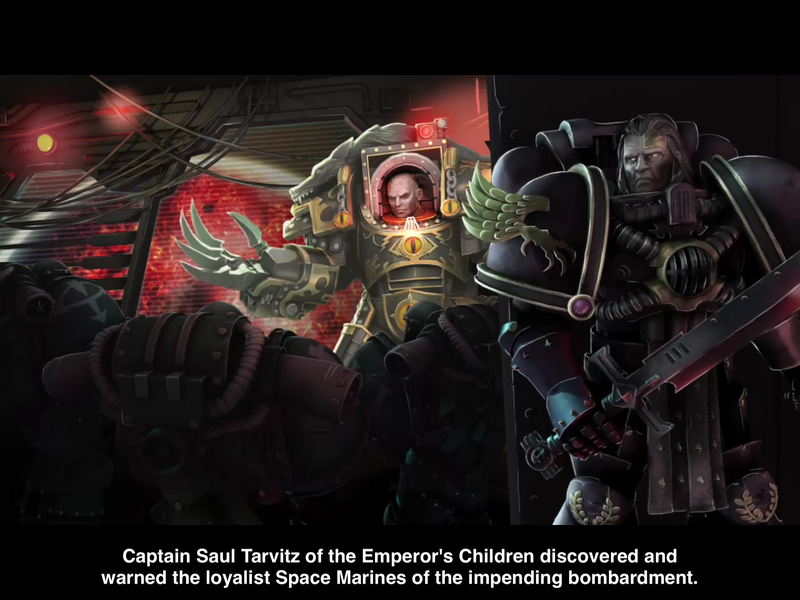
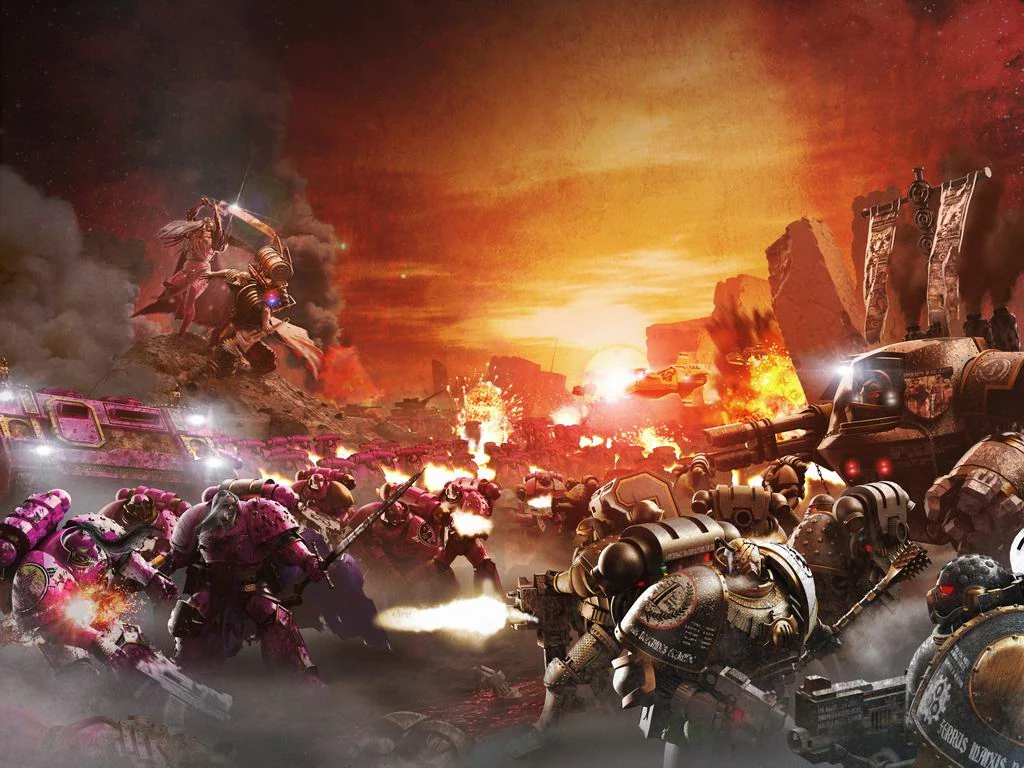
Path of Heaven is a fantastic novel. Chris Wraight presents a clear and compelling vision of what the Emperor's Children were like following Fulgrim's ascension.
The plot line of the story is that for four years the White Scars have sought to punish Horus' rebellion and find a path way back to Terra. Eidolon has led the Emperor's Children in countering the Khan's cunning stratagems, displaying a rare tactical genius able to frustrate even a Primarch's brilliance.
While chaos has seeped deep into the III Legion, the Emperor's Children still possess the precision, excellence and splendor that makes them the elite force of the galaxy in war. Of particular interest is a charismatic character introduced by Wraight named Ravasch Cario, who is the prefector of the Palatine Blades and an astonishing talent at the blade.
One of the great strengths of the book is how many characters in the story are struggling with their own internal demons (sometimes literally), and how they seek to defeat them.
While the White Scars are the primary subject of the novel, to me the Emperor's Children hands down steal the show.
Overall, in my opinion this is perhaps one of the best Horus Heresy books I have read yet. I give it five out of five stars ***** and recommend it highly!
Wednesday, April 27, 2016
Wednesday, April 20, 2016
Index of Emperor's Children fiction
Key Novels:
Fulgrim ****
As the Great Crusade draws to a close, primarch Fulgrim and the Emperor's Children continue their pursuit of perfection. But pride comes before a fall, and this most proud of Legions is about to fall a very, very long way...
Angel Exterminatus ****
Primarch Fulgrim of the Emperor’s Children leads his brother Perturabo and the Iron Warriors in an attack upon a mysterious eldar world, in search of ancient xenos weaponry.
Path of Heaven *****
The Khan returns! After the events of 'Scars', the White Scars Legion have chosen their loyalties. Now, after years of battle against the traitors, it's time to return to Terra and prepare for the inevitable invasion. But first, Jaghatai and his warriors must brave a gauntlet of enemies and the terrors of the warp...
Fabius Bile: Primogenitor ****
Exiled into the depths of the Eye of Terror for his dark deeds, former Emperor's Children Apothecary Fabius is drawn back to the Imperium in search of a secret that could be the key to saving his misbegotten life…
Short Stories:
The Phoenician (also in War without End) **
Gabriel Santar lies dying upon the sands of Isstvan, an unwilling witness to Ferrus Manus's murder. Only then, at the end, does he understand the darkness that will claim them all.
Imperfect (also in War without End) **
A simple game of Regicide between Fulgrim and Ferrus Manus is far more than it seems...
Chirugeon (also in War without End) **
Apothecary Fabius revisits his early work in halting the genetic flaw that almost destroyed the Emperor's Children. Could the threat of further degeneration be as real as he fears?
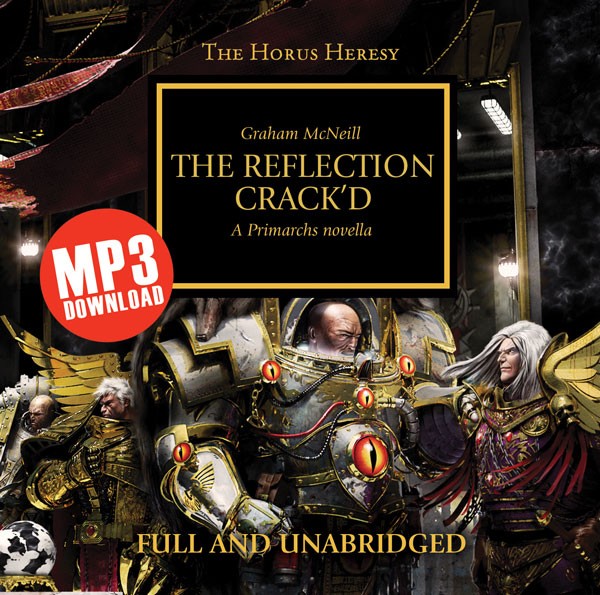
The Reflection Crack'd (also in the Primarchs) ****
While the Emperor's Children descend into debauchery, Fulgrim's closest allies plot against him to purge the Legion of the daemonic influence which has begun to plague their ranks.
The Tyrant's Champion *****
Huron Blackheart, Master of the Red Corsairs, is a warlord without a champion. Several hopefuls wish to claim the honour of fighting at the side of the Tyrant of Badab – the twins Szear and Feddeus; Dolosus, duellist extraordinaire, and Vorenus, a warrior of the Emperor’s Children who has fought the servants of the corpse-Emperor since time immemorial. Sent to battle one another in the twisted depths of Blackheart’s realm, which of them – if any – will emerge victorious and claim the title of Tyrant’s Champion?
Atrophy **
Culling hordes of humans on a damned world, Kerbaklalyth of the Emperor's Children is bored of the easy slaughter. The arrival of loyalist Space Marines changes everything.
The Staff of Asclepius **
An Ultramarines Apothecary tries to save precious gene-seed from an ancient and malevolent traitor in a new Ultramarines story by Graham McNeill.
In Wolves' Clothing **
The Space Wolves hunt a dangerous foe, one who will be as much a threat to them after his death as he is with a blade...
The Dark King (also in Shadows of Treachery) **
The acts of terror and warmongering by Konrad Curze, Primarch of the Night Lords Legion, have earned the ire of his brother primarch, Rogal Dorn. Wracked by terrible visions of the future, Curze is driven insane and attacks Dorn, setting the Night Lord on an inexorable course towards eternal damnation.
The Noose (in Meduson Anthology) **
Driven almost to the brink of self-destruction by the death of Ferrus Manus, the Iron Hands now seek vengeance for the many horrors of Isstvan V. Gathering survivors from the Raven Guard and the Salamanders aboard any vessels capable of warp travel, they wage a new campaign of annihilation against the traitor forces across the galaxy - a campaign masterminded by legendary warleader Shadrak Meduson.
Prodigal ***
When Fabius Bile is attacked by daemons aboard his frigate Versalius, he is surprised to be rescued by an old friend, one of his very first experiments. It has ever been the Apothecary's desire to improve mankind, to render them hardy enough to endure in a galaxy of pain and war. Such desires have often led to abominations created by Bile's own hand, and enemies too numerous to list. This creation, Mesuline, though ostensibly an ally, bears a cryptic message, one that could bode ill or well for her Progenitor.
A Song for the Lost (also in Call of Chaos) ***
In the Basilica of Himaeus the Justicar, nursing his latest beating from Bishop Eziah, young Ulix waits for Sister D’Fey to come and sing to him the only song that can ease his pain. He knows not why the other boys in the dorm hate her presence – nor does he care. When she sings the Song for the Lost, all his fears are soothed. As her voice lulls him to sleep, he cannot know that in his desire to escape the hardships of his life, he walks a path to an even darker future.
Audio Dramas:
Perfection ****
On a world besieged by the forces of Chaos, the Emperor’s Children and the World Eaters are forced into an uneasy alliance when the bodies of the fallen start to go missing...
Lucius: the Eternal Blade **
Renowned as one of the finest duelists the galaxy has ever known, Lucius seeks ever greater challenges against which to test himself.
Fabius Bile: Repairer of Ruin **
Lupercalia burns, the might of the Traitor Legions reducing the last redoubt of the Sons of Horus to rubble and through the ruins strides Apothecary Fabius of the Emperor’s Children...
The Soul Severed (also in Echoes of Revelation) *** 1/2
As Lord Commander Primus, Eidolon leads the Emperor’s Children in Fulgrim’s absence. But a challenge from within the Legion forces him to turn the Kakophoni against their brethren.
The Embrace of Pain ***
While voyaging through the depths of the warp, the infamous blademaster Lucius the Eternal is challenged by a servant of another god - a champion of the old Death Guard Legion, no less. Keen to remain dominant over his preening and ambitious rivals in the Cohors Nasicae, Lucius takes up his sword without a second thought... but could an unfeeling daemonhost of Nurgle, or the voices inside his own head, be the undoing of his Slaaneshi curse?
Other Novels Referencing Emperor's Children:
Deliverance Lost **
After their near-destruction at the hands of Horus’ Traitor Legions, the Raven Guard seek to escape and rebuild, but the forces of Chaos are insidious, and the Legion may yet face its doom
Galaxy in Flames ***
Having recovered from his grievous injuries, Warmaster Horus leads the triumphant Imperial forces against the rebel world of Isstvan III where Horus's treachery is finally revealed.
Vengeful Spirit ***
Warmaster Horus leads his Legion to attack the Knight world of Molech – home of House Devine and stronghold of the Imperial Army. What will he sacrifice in pursuit of his destiny?
Talon of Horus ***
When Horus fell, his Sons fell with him. A broken Legion, beset by rivalries and hunted by their erstwhile allies, the former Luna Wolves have scattered across the tortured realm of the Eye of Terror. And of Abaddon, greatest of the Warmaster's followers, nothing has been heard for many years. Until now...
Aurelian ***
After the destruction of Monarchia and the Emperor's reprimanding of the Word Bearers Legion, the primarch Lorgar journeyed into the very heart of Chaos...
Horus Rising ****
After thousands of years of expansion and conquest, the human Imperium is at its height. His dream for humanity accomplished, the Emperor hands over the reins of power to his Warmaster, Horus, and heads back to Terra.
The Damnation of Pythos ***
A group of battered legionaries regroups after the Dropsite Massacre, on a seemingly insignificant death world. But a darkness gathers that threatens to consume Pythos forever…
Outcast Dead ***
As the Horus Heresy rages across the galaxy, a lone Astropath learns a secret that will tip the balance of the war. But are his guardians leading him to safety or damnation?
(RATED * to *****)
A group of battered legionaries regroups after the Dropsite Massacre, on a seemingly insignificant death world. But a darkness gathers that threatens to consume Pythos forever…
Outcast Dead ***
As the Horus Heresy rages across the galaxy, a lone Astropath learns a secret that will tip the balance of the war. But are his guardians leading him to safety or damnation?
Shadowsword ***
The crew of the Baneblade Cortein's Honour are attached to a Shadowsword company. and thrown into a battle for the fate of entire star systems.(RATED * to *****)
Tuesday, April 19, 2016
Slaaneshi Daemons
Why aren't Slaaneshi daemons more attractive?
This is of course a potentially loaded question. Sexuality, especially in the context of the female form, is often used as a vehicle for bias and suppression in our society.
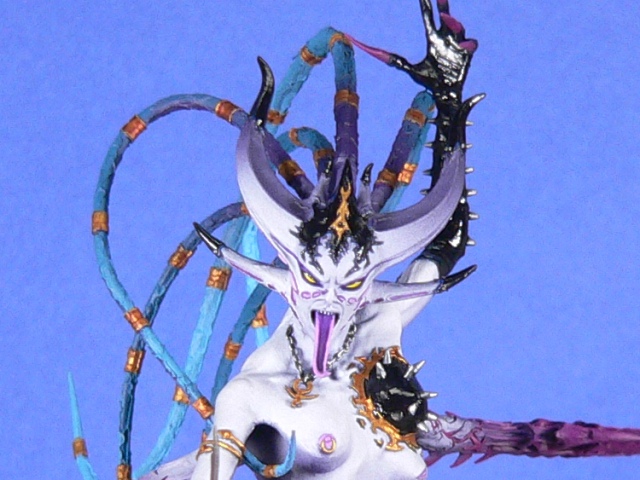
By definition however Slaaneshi demons are supposed to be the object of irresistible sensual desire. Games Workshop's lavender crab clawed models generally don't convey these attributes very effectively. While shapely, the artistic renditions of these entities are generally designed to convey a stronger sense of horror and peculiarity than emotions of desirability.
Why is this?
One possibility is that Games Workshop is an English company, and English culture is more puritanical than average. The Warhammer universe, while replete with violence and gore, is generally not a highly sexualized environment. Space Marines are all male and generally do not exhibit any specific interest in female companionship. Sisters of Battle are one of the few female factions in the game, and live a similarly ascetic lifestyle.
Is this stereotype of English culture accurate? Perhaps. A recent online poll indicated that England was the fourth country having the least sex.
Who was number one? Japan.

Another possibility is that Games Workshop wants to be able to market Warhammer to children. This may seem ridiculous given the average price of models. However even if most children may not have sufficient pocket change readily available to buy mini wargaming figures, their parents do. These parents control the purse strings and are unlikely to be impressed by highly sexualized renditions.
This is of course a potentially loaded question. Sexuality, especially in the context of the female form, is often used as a vehicle for bias and suppression in our society.
By definition however Slaaneshi demons are supposed to be the object of irresistible sensual desire. Games Workshop's lavender crab clawed models generally don't convey these attributes very effectively. While shapely, the artistic renditions of these entities are generally designed to convey a stronger sense of horror and peculiarity than emotions of desirability.
Why is this?
One possibility is that Games Workshop is an English company, and English culture is more puritanical than average. The Warhammer universe, while replete with violence and gore, is generally not a highly sexualized environment. Space Marines are all male and generally do not exhibit any specific interest in female companionship. Sisters of Battle are one of the few female factions in the game, and live a similarly ascetic lifestyle.
Is this stereotype of English culture accurate? Perhaps. A recent online poll indicated that England was the fourth country having the least sex.
Who was number one? Japan.
Another possibility is that Games Workshop wants to be able to market Warhammer to children. This may seem ridiculous given the average price of models. However even if most children may not have sufficient pocket change readily available to buy mini wargaming figures, their parents do. These parents control the purse strings and are unlikely to be impressed by highly sexualized renditions.
Also, as previously mentioned sexuality is easily abused, and perhaps the designers are aware of this danger. Games Workshop may have in fact opted against hypersensualizing Slaaneshi demons because of an enlightened awareness that such sexualization would be inherently sexist and objectifying.
Another intriguing possibility based in lore is that perhaps Slaaneshi demons are actually intended to be an acquired taste, which only a true connoisseur of extreme sensuality can properly appreciate. The average dull minded hive drone such as you or me is sadly lacking in the proper imagination and palate to recognize their true beauty, and thus reacts with predictable horror to them due to his philistine lack of proper illumination.
A reader also commented that perhaps Slaaneshi demons have shapeshifting abilities, allowing them to hide the horror of their true form until after they have ensnared their prey.
It is also possible that Games Workshop needs Slaaneshi demons to be unattractive, because otherwise their audience might be sympathetic to them because there is nothing really inherently wrong or evil about strong desire.
Regardless, to the Imperium it is clear that the dangers of Slaanesh heresy are manifest to those that do not properly shield their minds and souls to temptation.
From If the Emperor had a Text-to-Speech Device - Episode 19: Warp Grumbling
Wednesday, April 13, 2016
Tuesday, April 12, 2016
Slaanesh as Dionysius
Minus the negative aspects, Slaanesh is essentially an archetype of a fertility deity. Frey, Kokopelli, Venus and Ishtar are examples of gods and goddesses in this mold.
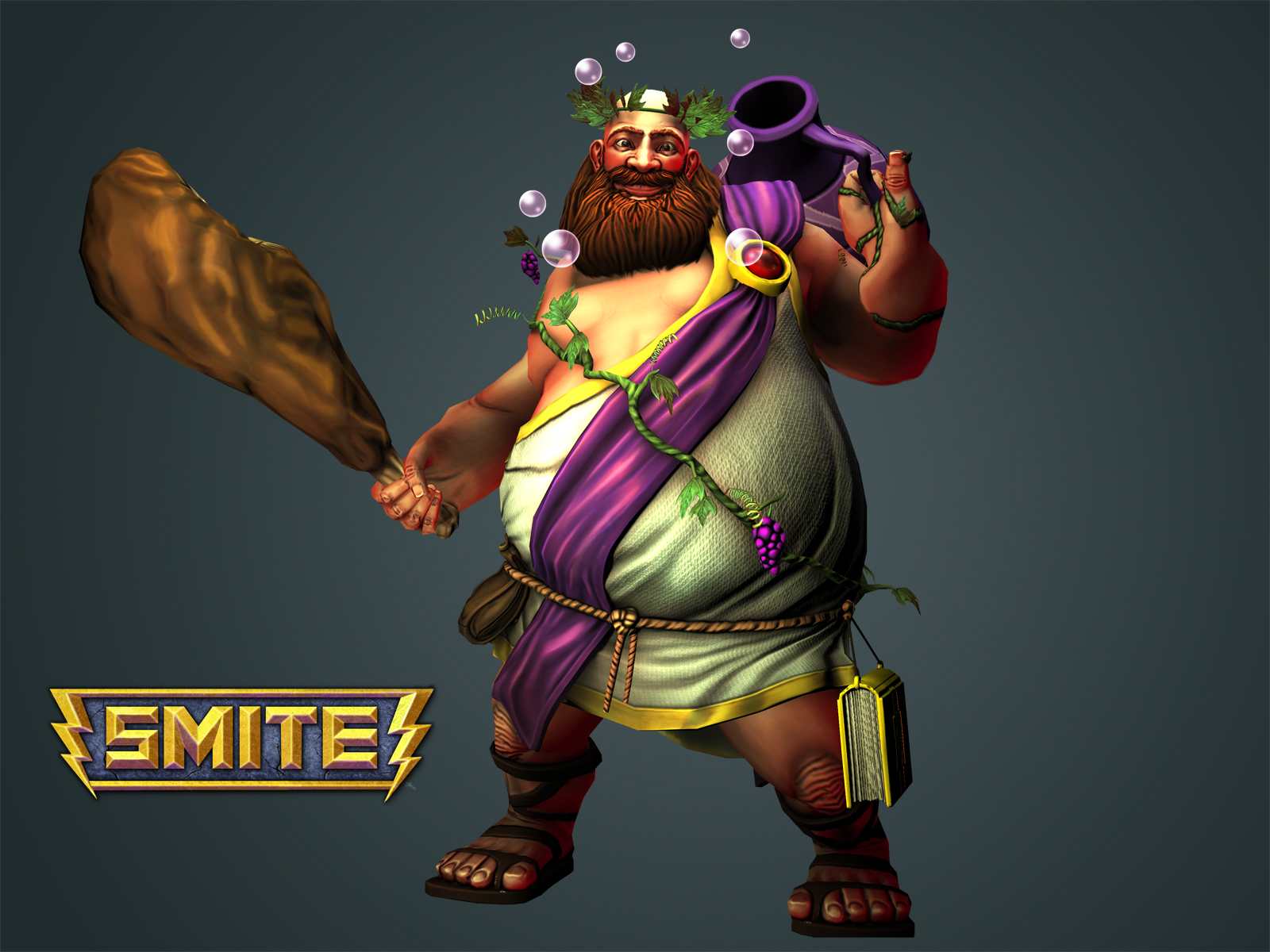
But perhaps no deity provides a closer analogue to Slaanesh than Dionysius.
Dionysius is the god of the grape harvest, winemaking and wine, of ritual madness, fertility, theatre and religious ecstasy in Greek mythology. The modern day name Dennis comes from this word. He is also known as Bacchus is Roman mythology, and in this form his name is still synonymous with drunken revelry.
Dionysius delights in bursting into scenes of ordinary civilization (like the kool aid man) and overturning order in favor of chaos.
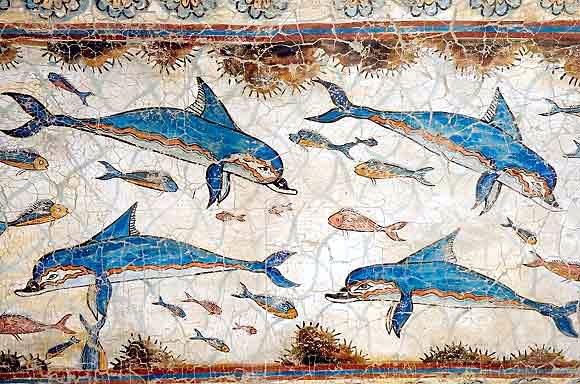
One of the Homeric hymns recounts how, while disguised as a mortal sitting beside the seashore, a few sailors spotted Dionysius, believing he was a prince. They attempted to kidnap him and sail him far away to sell for ransom or into slavery. They tried to bind him with ropes, but no type of rope could hold him. Dionysus turned the mast and oars into snakes, and filled the vessel with ivy and the sound of flutes so that the sailors went mad and, leaping into the sea, were turned into dolphins.
My first introduction to Dionysius was in Prince Caspian, a book in the Chronicles of Narnia by C.S. Lewis. In the story, the magical creatures of Narnia have been hiding or asleep for many years. The great lion, Aslan, calls the forest and river spirits awake and they swarm forth in an unruly horde led by Dionysius / Bacchus, dancing, singing, clashing cymbals and destroying signs of civilization. When they come to a restrictive girls' school they magically change the walls of the classroom into leafy branches and chase the teacher away with their wild, leafy ways.
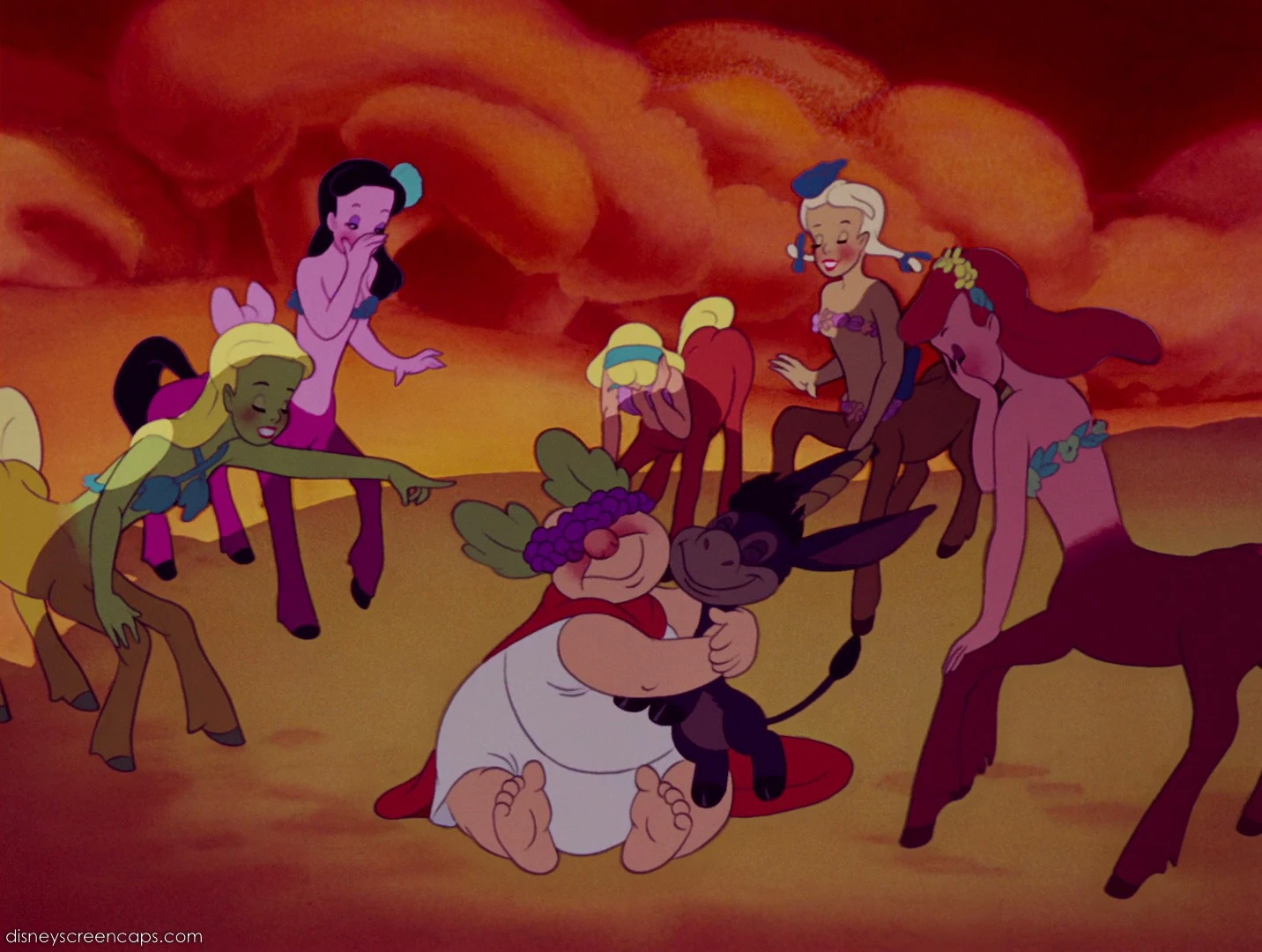
I also remember with fondness the portly figure of Bacchus in Fantasia, where he leads the revelry of a band of classical mythical creatures to the music of Beethoven's Pastoral Symphony.
This innocuous figure may seem a far cry from Slaanesh of the Warhammer universe, but the elements of the archetype are present, even in this most child friendly of forms. The deity in Fantasia while harmless remains pleasure seeking, experiential, over imbibing, and lusty.
Invocation of Dionysus (from Orphic hymns)
But perhaps no deity provides a closer analogue to Slaanesh than Dionysius.
Dionysius is the god of the grape harvest, winemaking and wine, of ritual madness, fertility, theatre and religious ecstasy in Greek mythology. The modern day name Dennis comes from this word. He is also known as Bacchus is Roman mythology, and in this form his name is still synonymous with drunken revelry.
Dionysius is sometimes shown as a mature bearded male and sometimes as an androgynous youth. He holds a staff tipped with a pine cone known as a thysus. His procession his made up of wild female followers called maenads and hedonistic satyrs. Dionysus is represented as the protector of those who do not belong to conventional society and thus symbolizes everything which is chaotic, dangerous and unexpected, everything which escapes human reason and which can only be attributed to the unforeseeable action of the gods. The Dionysian Mysteries were a ritual in which worshippers which used intoxicants and other trance-inducing techniques to remove inhibitions and social constraints, liberating the individual to return to a natural state.
Dionysius delights in bursting into scenes of ordinary civilization (like the kool aid man) and overturning order in favor of chaos.
One of the Homeric hymns recounts how, while disguised as a mortal sitting beside the seashore, a few sailors spotted Dionysius, believing he was a prince. They attempted to kidnap him and sail him far away to sell for ransom or into slavery. They tried to bind him with ropes, but no type of rope could hold him. Dionysus turned the mast and oars into snakes, and filled the vessel with ivy and the sound of flutes so that the sailors went mad and, leaping into the sea, were turned into dolphins.
My first introduction to Dionysius was in Prince Caspian, a book in the Chronicles of Narnia by C.S. Lewis. In the story, the magical creatures of Narnia have been hiding or asleep for many years. The great lion, Aslan, calls the forest and river spirits awake and they swarm forth in an unruly horde led by Dionysius / Bacchus, dancing, singing, clashing cymbals and destroying signs of civilization. When they come to a restrictive girls' school they magically change the walls of the classroom into leafy branches and chase the teacher away with their wild, leafy ways.
I also remember with fondness the portly figure of Bacchus in Fantasia, where he leads the revelry of a band of classical mythical creatures to the music of Beethoven's Pastoral Symphony.
This innocuous figure may seem a far cry from Slaanesh of the Warhammer universe, but the elements of the archetype are present, even in this most child friendly of forms. The deity in Fantasia while harmless remains pleasure seeking, experiential, over imbibing, and lusty.
Invocation of Dionysus (from Orphic hymns)
- "I call upon loud-roaring and revelling Dionysus,
- primeval, double-natured, thrice-born, Bacchic lord,
- wild, ineffable, secretive, two-horned and two-shaped.
- Ivy-covered, bull-faced, warlike, howling, pure,
- You take raw flesh, you have feasts, wrapt in foliage, decked with grape clusters.
- Resourceful Eubouleus, immortal god sired by Zeus
- When he mated with Persephone in unspeakable union.
- Hearken to my voice, O blessed one,
- and with your fair-girdled nymphs breathe on me in a spirit of perfect agape".
Thursday, March 24, 2016
E-Book Recommendation: the Tyrant's Champion
The Tyrant's Champion is an excellent Black Library short story by Sarah P. Cawkwell about Vorenus, a warrior of the Emperor's Children who fights along side the Red Corsairs in the 40K universe. Huron Blackheart, Master of the Red Corsairs, seeks a new champion for his warband. Vorenus is one of several hopefuls that seek to claim this honor through a trial by combat.
This story provides a strikingly clear vision of what a member of the Emperor's Children should look and fight like centuries after the Horus Heresy. Vorenus is a true son of Fulgrim. He is elegant, refined and aloof. He is swift with his sweeping spatha long sword, eschewing the axes preferred by his less cultured associates. He is artistic in temperament, entranced equally by the beauty of combat and aesthetic ornamentation. He wears his former head of ghost fine pale hair shaved close to his head for reasons of battlefield practicality, but still clearly remains a "peacock among the poultry."
The perfection that Vorenus seeks is the rush of battle and experience, culminating in the ideal death in battle.
I highly recommend this book to any fan of the Emperor's Children. A+
http://www.blacklibrary.com/all-products/tyrants-champion-ebook.html
Monday, March 21, 2016
Iron Hands and Emperor's Children
Yet in truth the two legions are united in their uncompromising drive towards a singular, absolute purpose. At the highest levels the difference between their respective goals may only be a matter of nomenclature. Perfection may be akin to strength. Imperfection may be very similar to weakness.
In each case the obsession may in fact be driven by a deep rooted insecurity. As detailed in the short story Chirurgeon by Nick Kyme the Emperor's Children were plagued in their early years with a contaminating flaw to their gene seed, which was only eliminated once Fulgrim was found. The Iron Hands labor in the shadow of their Primarch, subconsciously fearing that their true selves may have been too weak to live up to his expectations for them.
Despite their similar goal, it is undeniable that the ways the legions have respectively chosen to manifest their drive differs greatly. The Emperor's Children have delved ever deeper into their experiences as sensate beings, ever seeking to develop and experience more. The Iron Hands on the other hand have seemingly desired to turn their backs on the aspects of their being that make them human, hoping perhaps to deaden the pain and insecurities of their primarch's disappointment by becoming unfeeling machines.
Sunday, March 20, 2016
Horus Heresy: Drop Assault Review
Drop Assault is a Clash of the Clans style mobile game set in the 30k universe. You take on the role of either a loyalist or traitor faction of the Emperor's Children, Sons of Horus, Death Guard, or World Eaters and build a base and army and attempt to dominate the planet. Each legion receives a particular special bonus. In the case of the EC they have a +10% movement bonus.
The game play is fairly simple, divided into attack and defense. On defense you spend energy and time on your base to slowly erect and improve buildings such as power generators and munition drops to improve your resources and capabilities. You also build defensive weapons to repel attacks and rally zones to muster armies to invade other players. Each building takes an increasing amount of time and power to construct, which can be reduced by using currency paid from real life or by voluntaily watching ads for other mobile games.
On attack you use the troops that you have gathered to attempt to invade other players and sites and attempt to steal their resources.
At the higher levels of play the EC offer the use of specialized Phoenix Guard, which are like normal terminators but faster moving.
The game also allows you to enter a chapter with other players and socialize, which is kind of like a guild. I'm in a loyalist EC themed chapter called Phoenix Guard.
Overall the game is fairly diverting, as long as one has a reasonably high tolerance for the money grabs. It is fun to see the units and lore of the HH come to life in a mobile game.
Grade wise I'd give this game a B-. Worth giving a try but not for every one!
Wednesday, March 16, 2016
Tyrian Purple
Fulgrim is referred to as the Phoenician. His legion is known as the Emperor's Children and they wear purple. These are not coincidental choices.
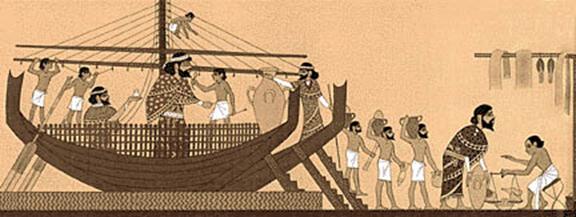
The Phoenicians were an ancient maritime civilization situated on the modern day coast line of Lebanon, Syria and Israel. It was an enterprising trading culture that spread across the Mediterranean from 1500 BC to 300 BC. The Phoenician culture helped spread the alphabet used by the modern Western world today.
One of the most prized goods that the Phoenicians traded was a dye called Tyrian purple. It is a secretion produced by several species of predatory sea snails in the family Muricidae, rock snails originally known by the name Murex.
The Roman mythographer Julius Pollux, writing in the 2nd century AD, asserted (Onomasticon I, 45–49) that the purple dye was first discovered by Heracles, or rather, by his dog, whose mouth was stained purple from chewing on snails along the coast of the Levant.
The reason that this dye was so prized was that it would not fade over time. It is believed that the intensity of the purple hue improved rather than faded as the dyed cloth aged.
The Romans valued the color so much, that it became associated with the Emperor. A child born to a reigning emperor was said to be porphyrogenitos, "born in the purple".
Bringing the motif full circle is the symbol of the Aquila. The eagle was the symbol of Roman emperors and is also the symbol of the Emperor of Mankind. The Emperor's children therefore fitting bear the Aquila and the eagle's wing, alone of the legions.
The phoenix is a mythical eagle like bird from Greek and Roman mythology, that rose from its ashes similar to how the Emperor's Children rose from the danger to their gene seed in their earliest years. The phoenix was sometimes associated with Phoenicia in ancient times, and the term of someone from Phoenicia is a Phoenician. La Fenice was also originally a famous opera house in Italy, which meant "The Phoenix".
Tuesday, March 15, 2016
Successor Chapters
Did the Emperor's Children have any successor chapters?
Officially, no. After the Horus Heresy many of the Emperor's Children were based in the Canticle City on the daemon planet Harmony. They were led by Fabius Bile, who was experimenting on creating clones of primarchs. Harmony was invaded in late M31 by Abaddon and his nascent Black Legion, and the Emperor's Children scattered. What is left of their legion is currently splintered into numerous squabbling warbands located in the Eye of Terror.
There are rumors that various EC groups are led by Lucius, a revived Eidolon, Fabius Bile (the Consortium), Jihar, Dzyban, the Radiant / Oleander and the Sapphire King.
There are also rumors that the Red Scorpions might be a surviving loyalist branch of the Emperor's Children. The Red Scorpions are notable for their extreme adherence to the virtue of purity, and are a favorite chapter of Forge World. Their gene seed is renown as the purest in the galaxy. Red Scorpions participated in the Siege of Vraks, the Anphelion Project, and the Badab War.
The 34th Millennial of the Emperor's Children were also proud loyalists that clashed violently with their former brothers, and the current Death Eagles chapter may very well be their legacy.
Despite superficial similarities other Slaneesh warbands such as the Flawless Host, Angels of Ecstasy, Exquisite Host, Flickering Blades, and the Violators are not believed to be Emperor's Children, although this is far from certain.
Deathwatch Mobile Game
It's often difficult to adapt the rules of tabletop games to computers or tablets. Attempts have been a mixed bag, with games like Warmachine: Tactics providing reasonably acceptable translations while games like Space Hulk falling disappointingly short The new mobile game, Deathwatch, however provides a genuinely enjoyable experience.
The game is somewhat similar to Space Hulk insofar as the player controls a kill team of space marines against hordes of nefarious tyranids. However the controls of the game have been considerably streamlined in comparison to its somewhat ponderous predecessor, leading to superior, more intuitive gameplay. The game has also been infused with a limited role playing element, where you can select members of your kill team from the ultramarines, blood angels, or space wolves and build them up and watch their skills expand.
Overall one of the better new 40k mobile games out there and a must try.
Friday, March 11, 2016
Reflection Crak'd (spoilers)
The Reflection Crack'd is a pretty important short story for EC fans. First of all it provides a link between the Fulgrim and Angel Exterminatus novels. Secondly, it firmly confirms that Fulgrim is now himself, and not a demon from the warp. Not to mention that it kills off my favorite HQ, Eidolon.
The story is also notable because Fulgrim shares some further insights with his legion with regard to the true nature of perfection. As previously established, Fulgrim does not seem to acknowledge a division between spirit and the sensate material world.
However the Reflection Crack'd takes things a step further. In essence, Fulgrim seems to imply that the material world has been infused with a desire to seek more complex forms, greater purpose and more opportunities. In other words it seeks to attain perfection through advanced development and diversity.
Here are some select quotes from Fulgrim's lips:
"Think of how one measures good and evil and you will see that what I am, what I am becoming, is a thing of perfect beauty. A thing of goodness."
"This universe began in simplicity, with an event of such rapid expansion that it cannot ever be measured. In the first fraction moments of its existence, the universe was a place of such staggering simplicity that we cannot even begin to imagine it. But over time, those simple elements began to cohere, to come together to ever more complex forms. Particles became atoms, and atoms became molecules until they grew in complexity to form the first stars. . ."
"None of this coming together is random. It is part of the universe's nature, its tendency towards complexity. . . all things are part of this cycle of building and coming together, from the lowliest organism to the highest functioning sentience. Given the right circumstances, everything will tend towards becoming something more beautiful, more perfect and more complex. This has been this way since the beginning of this universe's lifespan, and that nature is as inescapable as it is inevitable."
"If you accept that the universe is constantly moving towards its final state of perfect complexity, and that this is its inevitable destination, then anything that hinders this process must be defined as evil. By the that same logic, anything that promotes this ongoing journey is surely good. I am moving towards that perfect complexity, and by hindering my ascension you are acting in the cause of evil."
Surprisingly this mode of thinking has a long history with our own modern perspective. It is in essence a teleological argument. Science hypothesizes that out of the chemical building blocks of life, that the original single celled organisms arose. Those organisms grew more complex and achieved greater possibilities, becoming fish, then amphibians, then reptiles, then mammals, then humans capable to perceiving their own consciousness and building mighty cities and exploring space. Fulgrim in essence embodies and universalizes an evolutionary / intelligent design perspective.
The alternative is stasis, puritanical limitations and gradual decay. Somewhat like what 10,000 years of deterioration have done to the Imperium and the occupant of the Golden Throne.
Tuesday, March 8, 2016
Emperor's Children Quick Notes
I often have trouble remembering the EC rules, so I made a little cheat sheet of the rules I use most frequently.
Monday, February 29, 2016
White Naga
In the novel Angel Exterminatus by Graham McNeil, Fulgrim attains apotheosis and becomes a four-armed, serpentine Daemon Prince of Slaanesh. The serpent is a very ancient motif, laden with powerful symbolism.
1. Fertility
6. Power
Reptiles have long stirred deep feelings of fear and awe in humans. In East Asia, dragons are particularly serpent like. Some scientists have conjectured that mammals have been hard wired since the time of the dinosaurs to fear reptiles, and this may be why stories of dragons, though mythical, are near universal.
7. Deceit
The serpent does not walk on feet like a normal animal. Nor does it travel in a straight line. Instead it slithers from side to side in a circuitous manner in a deceptive manner. In the Garden of Eden, it was a serpent that spoke honeyed words to Eve and tricked her into eating the fruit of the tree of knowledge.
8. Disorder
Jormungandr, the great world serpent, surrounds Midgard in Norse myths and awaits its destruction. The Ouroboros represents the primal state, and the formless disorder that surrounds order and is involved in periodic renewal. The Egyptian deity Apep sought to swallow the sun, causing eclipses.
1. Fertility
Serpents are obvious phallic symbols, ostensibly resembling elongated sexual organs. While Slaanesh is not solely erotic in nature, he is the prince of excess and pleasure. The Laeren were serpentine beings devoted to his worship, and their temple fully embodied this aspect.
2. Water
The form of a serpent resembles a river. Water was very important in agricultural societies, and is therefore also synonymous with fertility. Water deities often take the forms of snakes.
3. Rebirth and healing
A serpent is able to cast off its skin and emerge anew. This has led many cultures to hypothesize that snakes are immortal and can be reborn. In Greek myth, the demigod Asclepius learned the secrets of medicine after watching snakes. In Mesopotamian mythology, Gilgamesh obtains a herb that will grant him eternal life, but a snake steals and eats it. Fulgrim himself of course undergoes a transformative process when he ascends to daemonhood.
4. Guardianship
Serpents are represented as potent guardians of temples and other sacred spaces. This connection may be grounded in the observation that when threatened, some snakes frequently hold and defend their ground, first resorting to threatening display and then fighting, rather than retreat. Thus, they are natural guardians of treasures or sacred sites which cannot easily be moved out of harm's way.
Hindu imagery commonly involved cobras sheltering deities under their hoods. The naga is considered a mighty nature spirit with the partial body of a human and the tail of a snake.
5. Danger and Poison
Serpents are predators, and even small snakes are potentially dangerous if armed with venom. This connection depends in part on the experience that venomous snakes often deliver deadly defensive bites without giving prior notice or warning to their unwitting victims. The worship of the feathered serpent was wide spread among the Aztecs as Quetazlcoatl, a fearsome deity for a warlike people.
Reptiles have long stirred deep feelings of fear and awe in humans. In East Asia, dragons are particularly serpent like. Some scientists have conjectured that mammals have been hard wired since the time of the dinosaurs to fear reptiles, and this may be why stories of dragons, though mythical, are near universal.
7. Deceit
The serpent does not walk on feet like a normal animal. Nor does it travel in a straight line. Instead it slithers from side to side in a circuitous manner in a deceptive manner. In the Garden of Eden, it was a serpent that spoke honeyed words to Eve and tricked her into eating the fruit of the tree of knowledge.
8. Disorder
Jormungandr, the great world serpent, surrounds Midgard in Norse myths and awaits its destruction. The Ouroboros represents the primal state, and the formless disorder that surrounds order and is involved in periodic renewal. The Egyptian deity Apep sought to swallow the sun, causing eclipses.
Thursday, February 25, 2016
Horus Heresy Talisman
I was there the day Horus killed the Emperor. . .
I beat Horus Heresy Talisman tonight. For anyone who is not familiar with the game, Talisman started out as a fantasy themed adventure board game that came out in 1983. Fantasy Flight games made a Warhammer 40K version of the game called Relic about two or three years ago. Then last week, a computerized version of Talisman was released on Steam, set in the Warhammer 30K universe.
30K Talisman is a reasonable amount of fun. You start out with a Warlord, such as a primarch or other notable character. By rolling dice, you move around the squares of the board, encountering potential friends, foes and curiosities. As you defeat enemies and gain equipment, your character's stats improve, just like a role playing game. Once you are strong enough, you will take a quest to achieve a challenging goal. If successful you will be granted a Talisman, which will allow you to face the Emperor on Terra with Horus in a duel to the death.
Once victorious, you will plunge the galaxy into chaos and darkness and cast down the false emperor from his golden throne.
Overall, a pretty good game despite some limitations. The gameplay mechanics, while simple, can be a little mystifying at times. It's also not quite as imaginative an experience as Relic is. It's a little disappointing that only a certain number of warlords are included with the game, with additional characters available through DLC. Moreover the game is too long for a single sitting and can drag on a bit if you are playing versus AI.
Nevertheless, it remains a nicely packaged way to get the essence of a Horus Heresy RPG experience in a neatly arranged experience. And you get to kill the Emperor!
Friday, February 19, 2016
What does a bolt round look like when shot?
The Boltgun is the standard weapon of the Adeptus Astartes. A .75 caliber weapon, the Boltgun fires a self-propelled explosive 'bolt' which explodes with devastating effect once it has penetrated its target, effectively blowing it apart from the inside.
A .75 caliber weapon is the equivalent of approximately 20 mm metric. This is what a 20 mm cannon round looks like when shot at a car engine:
This video shows why no one except a space marine should fire a bolter from their hand.
A .75 caliber weapon is the equivalent of approximately 20 mm metric. This is what a 20 mm cannon round looks like when shot at a car engine:
This video shows why no one except a space marine should fire a bolter from their hand.
Monday, February 15, 2016
Friday, February 12, 2016
Top Five 40K Audios
Here are my top five Warhammer 40K audios!
The world of Idos is plagued by ravening tyranids. Into this maelstrom come the Raven Guard 4th Company, the warzone perfectly suited to their lightning-strike methods of combat.
1. The Long Night
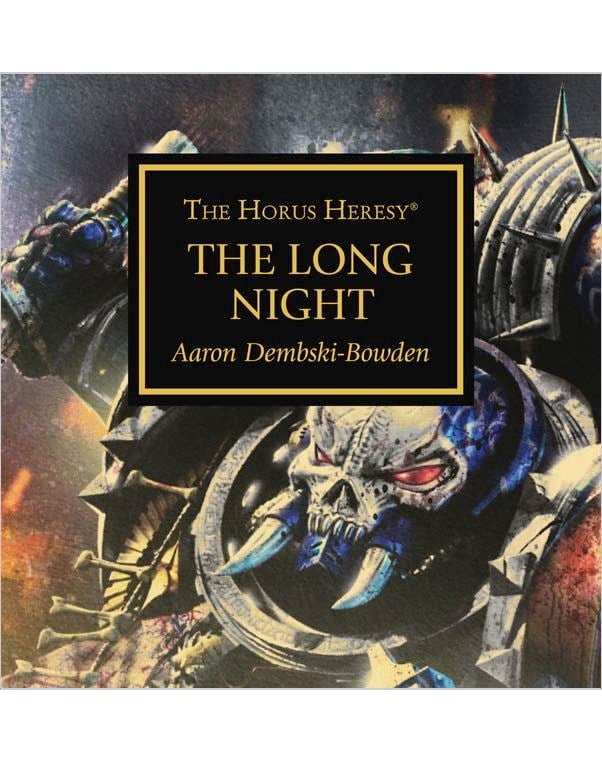
The Dark Angels and the Night Lords fought one another to a bloody stalemate during the Thramas Crusade and, though the Lion eventually claimed victory, it left both Legions scattered and under-strength. Jago Sevatarion, First Captain of the Night Lords, languishes in a gaol cell in the heart of Ultramar. Far from a spent force, the Night Lords must consider where their loyalties lie, and what path they will take in the days and months to come.2. Klaw of Mork
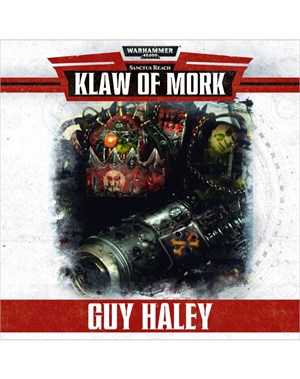
The Red Waaagh! has fallen on Alaric Prime and the mekboys are working on Big Mek Mogrok’s cunning and brutal plan – to pull a comet from space with the massive and dangerous ‘Klaw of Mork’ and bring it down on the heads of the world’s human defenders.3. Iron Devil
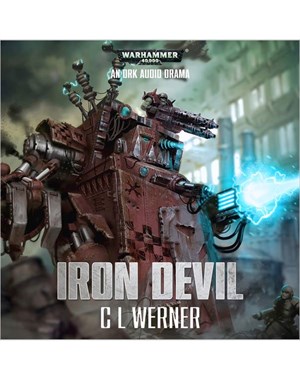
Taking refuge from deadly desert storms, the Imperial Guardsmen of the Cadian 267th find themselves in even more danger as they face the might of an ork Morkanaut.4. Trials of Azrael
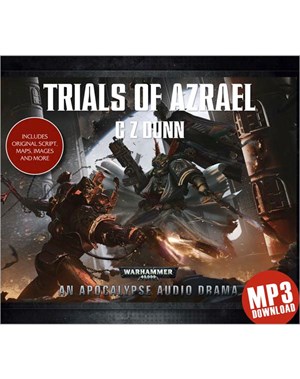
As war rages in the Pandorax system, the Imperial battleship Revenge comes under attack by the dread forces of Chaos. As warriors of the Black Legion rampage through the venerable craft, Supreme Grand Master Azrael leads the First Company of the Dark Angels - the elite Deathwing – onto the vessel to eliminate the enemy. Separated from his men, Azrael finds himself trapped in the lower decks with only a tech-priest for company and one of the galaxy's most fearsome warriors hunting him: the infamous Khârn the Betrayer.5. Helion Rain
Subscribe to:
Posts (Atom)